After the Last Note Faded: How Deadheads Built a World That Didn't Need the Dead to Survive
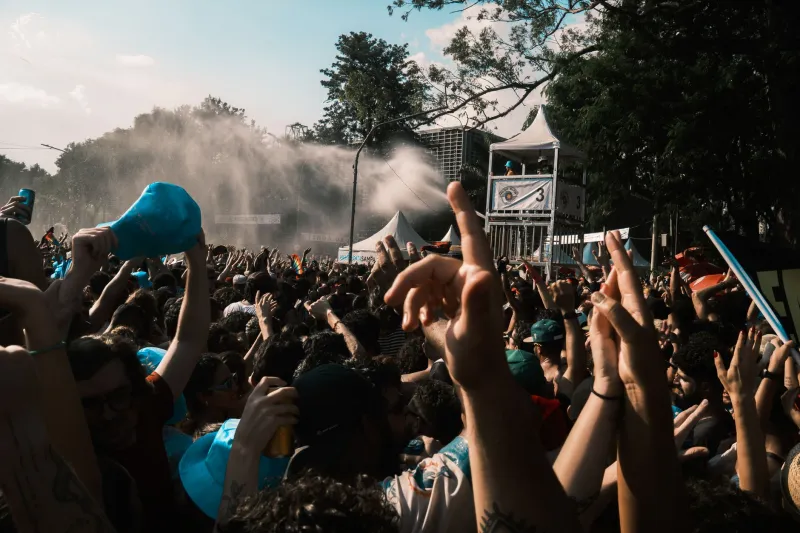
Most fandoms follow a predictable arc. The band breaks up, the tour posters come down, and slowly — sometimes quickly — the community thins out like fog burning off in the morning sun. People move on. They find new music. The message boards go quiet. The whole thing folds back into memory.
The Grateful Dead did not get that memo. And neither did their fans.
When Jerry Garcia passed away on August 9, 1995, and the remaining members announced the band would not continue, there was genuine grief — the kind that doesn't perform itself on social media because social media barely existed yet. It was real, private, and collectively felt across hundreds of thousands of people who had organized significant chunks of their lives around following this band. Some of them had been doing it for thirty years. Some had only caught a handful of shows. All of them woke up that August morning to a world that felt structurally different.
And then something strange happened. The community didn't dissolve. It deepened.
Grief as Creative Fuel
There's a theory in psychology that loss, when processed collectively, can actually strengthen the bonds between the people doing the grieving. The Deadhead community in 1995 became an accidental case study in exactly that. Without a tour schedule to organize around, fans had to invent new reasons to find each other — and they did, with a creativity that would have impressed the band itself.
Tribute acts that had existed on the fringes suddenly found themselves filling a real vacuum. Dark Star Orchestra, which launched in Chicago in 1997, didn't just cover Dead songs — they reconstructed entire historical setlists, night by night, giving fans a way to time travel through the catalog. That's not a cover band. That's something closer to a living archive with a kick drum.
Meanwhile, the surviving members splintered into solo projects and new configurations that kept the music moving in different directions. Phil Lesh and Friends, Bob Weir's various outfits, Mickey Hart's global rhythm explorations — none of these were the Dead, and nobody pretended they were. But they were adjacent to the Dead in ways that mattered, threads pulled from the same fabric.
The Jam Scene Inherited Everything
Here's something worth sitting with: virtually every major jam band that exploded in the late nineties and early 2000s owes a structural debt to what the Dead built. Phish had already been developing their own language, sure, but the sudden availability of an enormous, concert-hungry fanbase that knew how to travel, knew how to listen, and knew how to build community around live music? That accelerated everything.
The Deadhead diaspora didn't just mourn — it migrated. Widespread Panic in the South. String Cheese Incident in Colorado. Umphrey's McGee coming up through the Midwest. These bands absorbed fans who needed somewhere to put their energy, and those fans brought with them a whole culture of taping, trading, setlist obsession, and genuine musicianship appreciation that elevated the entire scene.
The Dead didn't just influence musicians. They trained an audience.
Spirit Without the Source
What's genuinely fascinating about the post-1995 Deadhead world is how spiritual the whole thing became — and that word isn't used loosely here. For a lot of longtime fans, the music had always carried something that felt bigger than entertainment. The communal experience of a three-hour show, the sense that something unrepeatable was happening in real time, the way 'Dark Star' could turn a parking lot into a cathedral — these weren't just aesthetic experiences. They were formative ones.
When the source of that experience disappeared, people didn't abandon the feeling. They found other containers for it. Meditation communities with roots in the Deadhead world. Intentional gatherings that looked more like retreats than concerts. The whole culture of transformational festivals — Burning Man expanding in the mid-nineties, Lightning in a Bottle, Symbiosis — drew heavily from people who had learned, following the Dead, that music and community and temporary autonomous spaces could do something genuinely meaningful to a human nervous system.
That's a remarkable legacy for a rock band.
The Archive Becomes the Altar
And then there's the archival obsession, which only intensified after the band ended. The tapes that Deadheads had been trading since the seventies took on new weight. Every recording became a piece of something irreplaceable. When the Dead's vault began opening up — official releases of legendary shows, the Dick's Picks series, eventually the Internet Archive hosting thousands of audience recordings — it wasn't just historical preservation. It was active community practice.
People who had never seen the band live were finding 1977 Cornell or 1972 Europe '72 and having the experience of falling in love with something that technically no longer existed. New fans kept arriving, decade after decade, pulled in by a catalog that rewarded deep listening. The community kept renewing itself from unexpected sources.
Deadheads in their sixties were introducing their kids. College students were stumbling onto 'Scarlet Begonias' and spending the next six months going down the rabbit hole. None of this required a tour. None of it required Jerry Garcia to still be alive. The music itself had become self-sustaining.
What This Actually Means
In 2025, fan culture is a topic of serious academic study, corporate strategy, and endless online discourse. Everyone wants to understand how communities form, persist, and monetize themselves. The Grateful Dead fanbase — specifically its behavior after the band ended — is one of the most instructive examples anyone could point to.
It survived because it was never really about the band in the transactional sense that most fandoms are. It was about what the band made possible between people. The shows were just the occasion. The community was the point.
When the occasion disappeared, the community didn't need it anymore. It had learned to generate its own occasions — its own shows, its own gatherings, its own rituals, its own ongoing conversation about what the music meant and what it continues to mean.
Deadheads didn't lose their band in 1995. They graduated from needing one.
That's not a small thing. That might be the most punk rock outcome imaginable for a group of people who spent thirty years following a band that told them, in a thousand different ways, that the real music was always the connection they made along the way.

