They Didn't Invent Rock and Roll, But They Invented the Reason to Keep Showing Up
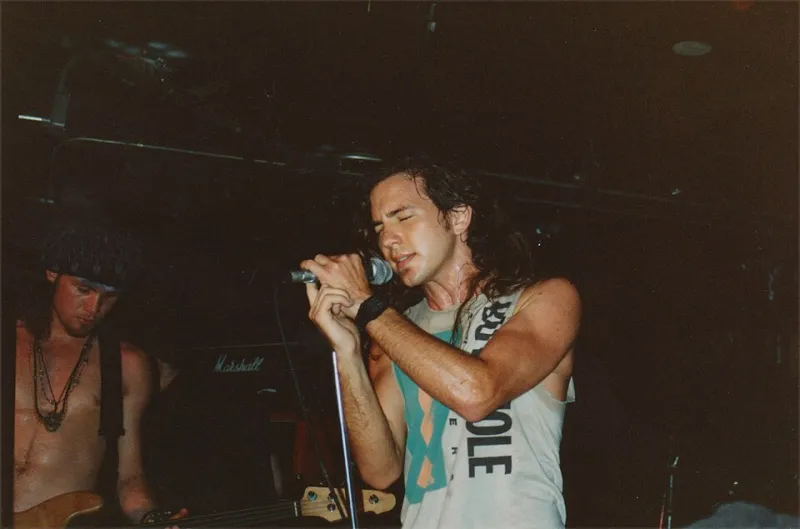
Photo: perfectrx, CC BY 2.0, via Wikimedia Commons
Somewhere between the second set opener and the moment Jerry Garcia's fingers found a melody nobody in the room had ever heard before, something shifted in American live music. Not a policy change. Not a label directive. Just a band deciding, night after night, that the script was optional — and discovering that audiences would pay good money, drive long distances, and rearrange their entire lives to watch that happen.
The Grateful Dead didn't coin the term "jam band." They didn't need to. They were too busy inventing the concept.
What "Improvisation" Actually Meant in 1968
To understand how radical the Dead's approach was, you have to park yourself back in the late sixties touring economy. Most rock acts ran tight sets. You rehearsed the songs. You played the songs. Maybe you threw in a solo. The show was the album, made live.
The Dead looked at that model and essentially said: what if the show was the anti-album? What if the whole point was that you couldn't know what was coming next?
This wasn't just artistic posturing. It was a genuine philosophical commitment to the idea that music, at its most alive, resists repetition. Garcia and company were pulling from jazz, bluegrass, psychedelia, and Eastern musical traditions that all valued the unrepeatable moment over the polished product. The result was something audiences had never quite encountered in a rock context — a performance that demanded active listening rather than passive reception.
You couldn't zone out at a Dead show and still feel like you'd been there. That was the whole deal.
The Economics of Uncertainty
Here's the part that gets overlooked in the mythologizing: the Dead's improvisational commitment wasn't just culturally interesting. It was economically brilliant, even if nobody planned it that way.
Conventional wisdom in the music industry held that predictability built loyalty. Give the fans what they know. Play the hits. Keep the setlist consistent so word-of-mouth reviews match the actual experience.
The Dead flipped that logic entirely. Their unpredictability was the loyalty engine. If you couldn't know what you'd get on any given night, you had a powerful incentive to show up to as many nights as possible. Miss a Tuesday in St. Louis and you might have missed the only time they ever played a particular song in that configuration, with that energy, in that room. That FOMO — before the acronym existed — kept Deadheads chasing the tour season after season.
By the 1980s, the Grateful Dead were consistently among the highest-grossing touring acts in the country, doing it without radio dominance or MTV saturation. Their revenue model ran almost entirely on live performance and the community infrastructure that grew around it. T-shirts in the parking lot. Tapes traded through the mail. Word of mouth that moved at the speed of a VW van on I-70.
That's not an accident. That's a self-sustaining ecosystem built on the promise that tonight would be different from last night.
The Inheritance: Who Picked Up the Blueprint
Phish is the most obvious heir. Burlington, Vermont, four guys, a commitment to musical telepathy and setlist unpredictability that would make even hardcore Deadheads blink. Trey Anastasio has been generous in acknowledging the lineage, but what Phish did was take the Dead's framework and push it into even more compositionally complex territory — songs that were designed to become launching pads for extended improvisation in ways that felt almost architectural.
Then there's the wider ecosystem: Widespread Panic building a fiercely devoted Southern fan base on the same multi-night-run model. String Cheese Incident carrying the jam flag into the festival era. Umphrey's McGee adding a prog-rock density to the formula. Goose, currently, doing something that feels genuinely fresh while being unmistakably descended from the same family tree.
Even acts that don't strictly identify as jam bands absorbed the lesson. Dave Matthews Band built one of the most successful touring operations in history on the principle that the live show is a different animal from the record. Ween — chaotic, genre-fluid, deeply weird Ween — runs on a similar premise that the performance itself is the point, and that the audience showing up repeatedly is the whole relationship.
What Got Passed Down (And What Got Lost)
Not everything translated cleanly. The Dead's improvisational approach was rooted in a specific kind of musical conversation — one that required all five members to be genuinely listening to each other in real time, willing to follow a thread wherever it led even if it meant the song dissolved into something unrecognizable. That level of collective musical trust is genuinely rare, and it's why even the best jam bands sometimes feel like they're executing improvisation rather than experiencing it.
The Dead also had a specific relationship with failure that most of their descendants haven't fully inherited. Some nights the jams went nowhere. Some second sets were genuinely rough. The willingness to fail in public, to have a night where the magic just didn't show up, was part of the authenticity that made the transcendent nights feel real. When everything is optimized for the highlight reel, you lose something.
The Living Legacy
Dead & Company spent years demonstrating that the improvisational model isn't just nostalgia — it's a viable contemporary approach to live music. John Mayer, whatever you think of his pop career, understood what he was walking into and took it seriously. The shows were different every night. The jams wandered. The setlists kept Deadheads guessing.
That's the real measure of what the Dead built: not a genre exactly, not a sound, but a relationship between performer and audience that treats every show as its own unrepeatable event. In an era when music is more accessible and more disposable than ever before, that proposition — you had to be there — carries more weight, not less.
The jam band economy is alive and generating real revenue, real community, real culture. Every festival lineup with three or four improvisationally-oriented acts is a small monument to a band that decided, sometime around 1966, that the set list was just a suggestion.
They were right. And the music industry is still catching up.