How a 47-Year-Old Song Found Its Way Into Your For You Page and Didn't Leave
Nobody warns you. That's the thing people keep saying when they describe how they found the Grateful Dead.
You're watching a video of someone's road trip through the Southwest and there's a song playing underneath the footage — something that sounds simultaneously ancient and completely contemporary, a guitar doing something that doesn't have a clean genre label attached to it. You Shazam it. You click through. Three hours later you've lost the thread of your original evening and you're seventeen minutes into a 1977 concert recording you found through a link someone left in a Reddit comment in 2019.
This is happening more than you'd think. And it's happening to people who were born well after Jerry Garcia died.
The Accidental On-Ramp
The pathways into Deadhead culture in 2024 are genuinely different from what they were even ten years ago, and radically different from the word-of-mouth, bootleg-tape, parking-lot-economy routes of the seventies and eighties. The common thread across the new routes is that they're almost always accidental.
TikTok has been particularly effective at this, which would have been an impossible sentence to predict. Short clips of Garcia solos — particularly from the mid-seventies, when his playing had a kind of melodic clarity that translates well to a fifteen-second preview — have circulated widely enough that the algorithm has apparently decided the Dead are a viable recommendation for people who listen to indie folk, psychedelic rock, or even certain strains of ambient electronic music. The overlap isn't as strange as it sounds. There's a reason artists from multiple genres cite the Dead as an influence; the music genuinely touches a lot of different things at once.
Spotify's algorithmic recommendations have pushed Dead tracks into playlists for people who never would have sought them out directly. "Ripple" shows up in acoustic folk mixes. "Friend of the Devil" lands in Americana playlists between Townes Van Zandt and Jason Isbell. "Eyes of the World" — with its distinctly jazzy, sun-drenched feel — has apparently been landing in lo-fi study playlists, of all places, where it sits more naturally than you'd expect.
What Keeps Them There
The discovery is one thing. What's more interesting is the retention rate.
The Grateful Dead's catalog is not easy. It's long, it's sprawling, there are multiple eras that sound almost like different bands, and the live recordings — which are really where the meat of it is — require a certain willingness to sit with something for an extended period of time. That's not a typical ask in 2024's attention economy. And yet people are doing it.
Part of what keeps new listeners engaged is the community, which has done a remarkable job of being welcoming rather than exclusionary. The Dead's long-standing tradition of open taping and archiving means there's an enormous amount of free, high-quality material available — and the community around it, particularly on platforms like Reddit and in various Discord servers, tends to greet newcomers with enthusiasm rather than gatekeeping.
But the music itself is doing a lot of the work. The Dead's catalog functions as a kind of time machine that doesn't require nostalgia to operate. You don't need to have been at the Fillmore in 1969 to feel what those recordings are reaching for. The music is open-ended enough that it meets you wherever you are, which is a quality that doesn't age.
The Gen Z Convert Phenomenon
Spend any time in Dead-adjacent online spaces and you'll find a notable number of people in their early twenties who've gone deep into the catalog with the kind of intensity that older fans recognize from their own early obsessions. They're not approaching it as nostalgia or as a curiosity about their parents' generation. They're approaching it the way you approach something that genuinely matters to you.
Some of them have found the Dead through family — a parent or grandparent who played tapes around the house. But many of them found it entirely independently, through the digital pathways described above, and only later discovered that the music had a generational weight attached to it. For them, the Dead isn't a legacy act. It's just a band they love, with an absurdly large and rewarding archive to explore.
This matters for the community's future in ways that are hard to overstate. Every generation of Deadheads has wondered what happens when the people who were there are gone. The answer, apparently, is that new people keep arriving — not because they're being marketed to, but because the music keeps finding them.
A Living Culture, Not a Museum Piece
What's striking about the current moment is how actively the community is creating new meaning around old material. The discussions happening online about specific shows, specific performances, specific musical moments aren't archival in a dusty sense — they're alive. People are arguing, discovering, changing their minds, introducing each other to things they've missed.
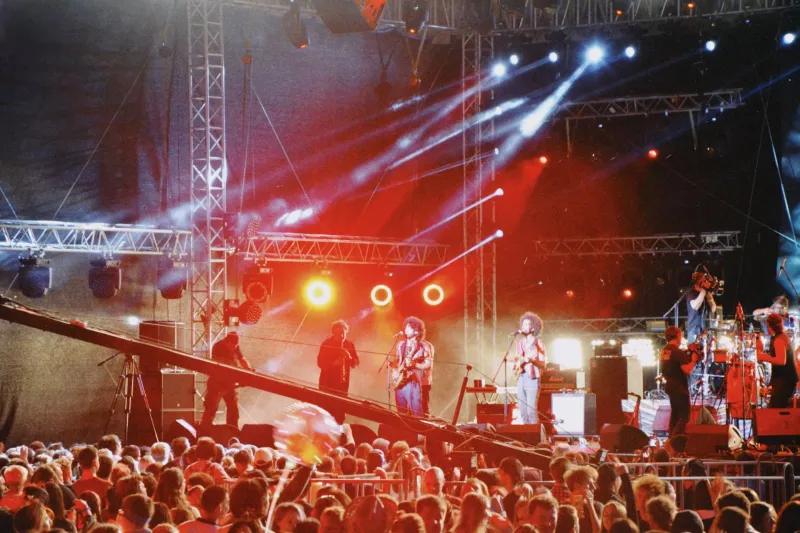
Dead & Company's recent run, and now Dead & Co's Sphere residency in Las Vegas, has given the community a contemporary focal point that keeps the conversation anchored in the present tense. New listeners can attend shows, not just study recordings. The culture has an active present, not just a storied past.
There's something genuinely unusual about a band whose primary creative era ended nearly thirty years ago but whose fan community is demonstrably growing. The Dead didn't build a legacy. They built a living thing — a set of music and practices and values that keeps regenerating itself through new people who find it, often by accident, and decide to stay.
Nobody warns you. But once you're in, you tend to understand why.