Reading Between the Songs: How Deadheads Learned to Decode the Band's Secret Setlist Language
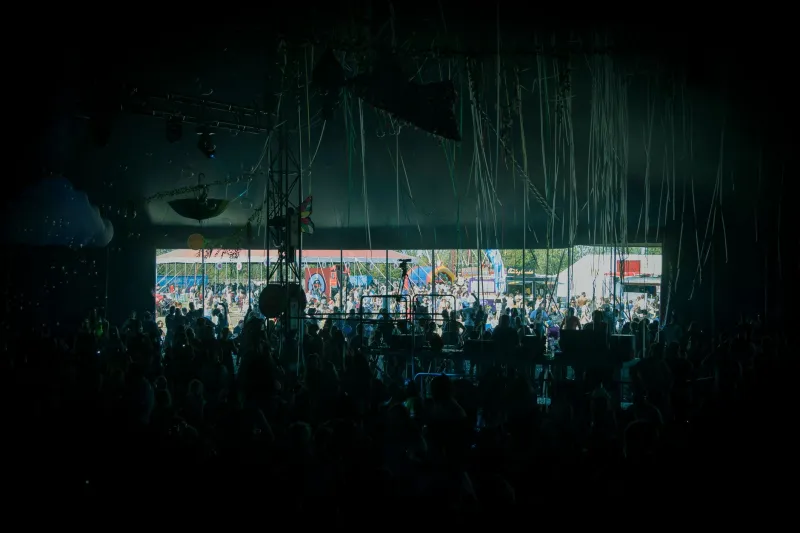
Somewhere around your fourth or fifth Dead show, something clicked. It wasn't the music exactly — you'd already surrendered to that. It was the order of things. The way a song choice at the top of the second set felt like a direct response to something that happened in the first. The way a transition from one tune into another landed like a punchline you'd been waiting three shows to hear. You looked at the person next to you, eyes wide, and they were already grinning. You both knew. Nobody needed to explain it.
That's the thing about the Grateful Dead's approach to setlists. It wasn't programming. It was conversation — and like any conversation worth having, it rewarded the people who'd been paying attention longest.
More Than a Running Order
Every band has a setlist. Most bands treat it like a blueprint: here are the songs, here is the sequence, execute. The Grateful Dead treated it more like an opening bid in a negotiation. The list that got scrawled on a piece of paper before showtime was a starting point, not a contract. Songs got dropped. Songs got added. Transitions got stretched into entirely new territory. But beneath all that flexibility, there was structure — and within that structure, meaning.
The band played with recurring song pairings so often that certain combinations became practically idiomatic. "China Cat Sunflower" into "I Know You Rider" is the most famous example — a segue so familiar that when the opening chords of "China Cat" rang out, audiences weren't just reacting to the song itself. They were reacting to the promise of what came next. That anticipation was its own kind of pleasure, a shared secret between the band and anyone who'd done their homework.
But the Dead didn't just lean on reliable pairings for comfort. They also weaponized them for surprise. Drop "China Cat" and then not go to "Rider"? That was a statement. It said: we know what you're expecting, and tonight we're going somewhere else. For a casual listener, it was just a song choice. For a Deadhead three years deep into the tape-trading circuit, it was a raised eyebrow from across the room.
The Architecture of a Show
Deadheads developed a whole vocabulary for discussing setlist architecture. First sets tended toward structured, song-based territory — a place to settle in, get your bearings, let the room find its temperature. Second sets were where the real conversation started, where longer exploratory pieces could unspool across twenty or thirty minutes, where the band might lock into a suite of songs that felt thematically or emotionally connected in ways that resisted easy explanation but were absolutely felt.
The placement of certain songs carried weight. "Dark Star" opening a second set wasn't just a song choice — it was a signal. It told the room that tonight the band was willing to go somewhere genuinely unknown. Certain songs functioned almost like punctuation marks: "Not Fade Away" as a set closer carried finality with a pulse; "Morning Dew" appearing anywhere in a show felt like a reckoning, a song so emotionally demanding that its presence shaped everything around it.
Over years of close listening, Deadheads built up a kind of internal grammar for all of this. They could feel when a show was building toward something. They could sense when the band was working through a theme — mortality, displacement, transcendence — across multiple songs without ever stating it outright. The setlist became a text that rewarded close reading, and the readers were in the room, dancing.
Callbacks, Rarities, and the Long Memory
One of the more remarkable features of the Dead's setlist language was its long memory. The band had a catalog that stretched back decades, and they drew from all of it — which meant that a song's appearance could carry historical weight beyond its immediate musical context. A tune that hadn't been played in two years showing up in the middle of a tour felt like a ghost walking through the room. Veteran Deadheads would lose their minds. Newer fans would learn, fast, that something significant had just happened.
This is where the tape-trading culture became essential to fluency. If you'd only ever experienced Dead shows in real time, your vocabulary was limited to what you'd personally witnessed. But if you'd spent winters working through boxes of cassettes — shows from '72, from '77, from the early '80s — you understood the full range of the language. You knew what it meant when the band dusted off a song that hadn't appeared on a setlist in years. You had context.
The setlist, understood this way, wasn't just a document of a single night. It was a node in a much larger network of musical history, a point where the past and present of the band converged in real time. Every show was simultaneously its own thing and a continuation of an ongoing story that had been running for decades.
The Audience as Co-Author
Here's where it gets really interesting: the conversation ran both ways. Deadheads weren't passive recipients of the band's setlist choices. Their reactions — the roar when a rare song opened, the collective exhale when a beloved pairing materialized, the knowing laughter when the band subverted an expectation — fed back into the room and, over time, influenced what the band played and how they played it.
Jerry Garcia and the rest of the band were listening to the audience just as closely as the audience was listening to them. A song that consistently generated electric responses found its way back into rotation. A pairing that seemed to unlock something special got revisited, refined, occasionally dismantled and rebuilt. The setlist wasn't handed down from on high — it emerged from a long, ongoing, genuinely mutual exchange.
That's the part that's hardest to explain to someone who never experienced it firsthand. The Grateful Dead weren't performing for an audience in the traditional sense. They were performing with one — and the audience's fluency in the band's musical language was what made that collaboration possible.
A Living Language
Languages die when nobody speaks them anymore. The Grateful Dead's setlist language hasn't died — if anything, it's more rigorously documented and analyzed now than it ever was when the band was actively generating new material. Setlist databases, show archives, decades of fan scholarship: all of it exists to preserve and extend the vocabulary that got built across thirty years of concerts.
New listeners come to the archive and learn the grammar the same way older Deadheads did — through immersion, through repetition, through the slow accumulation of context that eventually lets you hear not just what the band played, but what they meant by it.
Every show was a chapter. Every setlist was a sentence in a conversation that never quite reached a period. And somewhere out there, people are still reading.