Nobody Fills That Space: The Impossible Weight of Playing Guitar in Jerry Garcia's Shadow
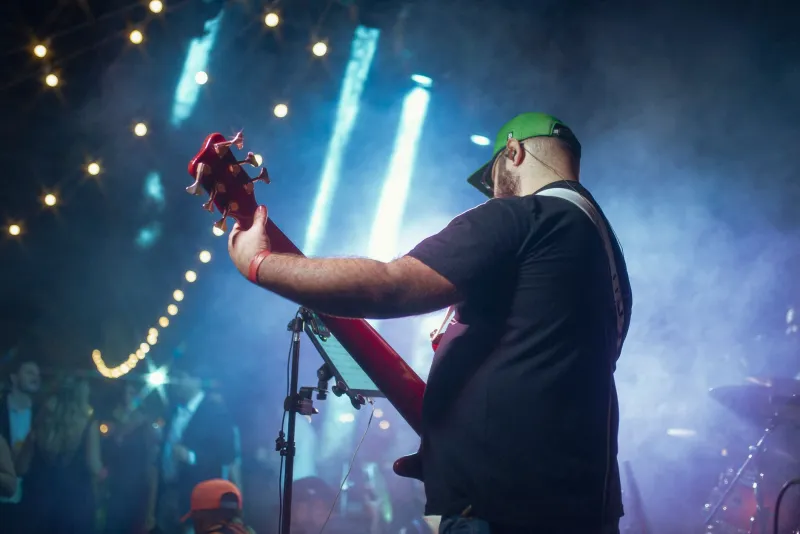
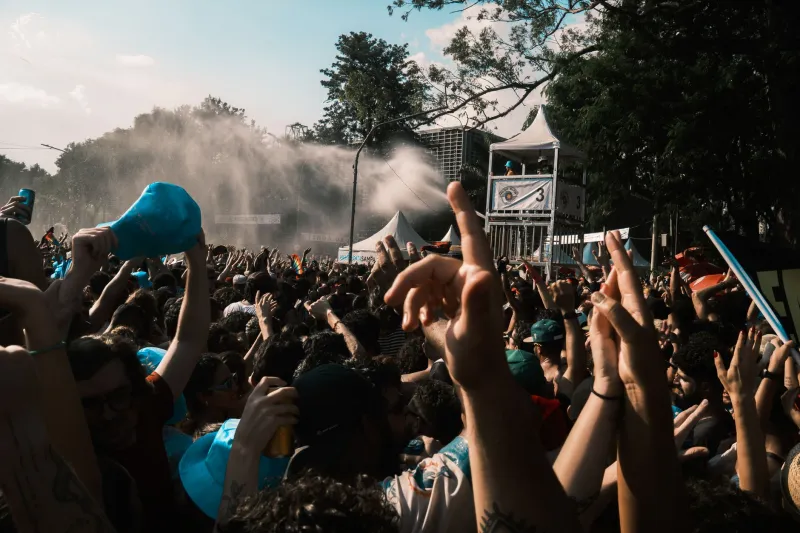
There's a moment that happens at almost every Dead & Company show, every Furthur reunion, every Phil Lesh & Friends gig — really any gathering where the songs are still being played but the man who made them iconic is not. Someone in the crowd, maybe three beers deep, maybe stone cold sober, leans over to their friend and says it. He's good, but... The sentence doesn't need to finish. Everyone within earshot already knows what comes next.
Jerry Garcia has been gone since August 1995. That's nearly three decades of guitarists stepping into a role that was never, technically, a role at all — it was a singular human being, irreproducible and strange and completely his own. And yet the Deadhead community, with all the love and loyalty that defines it, keeps doing the thing that communities do when they lose someone enormous: they keep measuring everyone else against the ghost.
The Standard That Wasn't Built to Be Met
Let's be honest about what we're actually asking when we hold a guitarist up to Garcia's light. We're not just asking whether they can play. Garcia's technique — that warm, singing tone, the way a note would bend and hover like it was deciding whether to resolve — wasn't the product of formal training or calculated style. It was the accumulated output of a man who absorbed bluegrass, jug band music, jazz, blues, and Indian classical music and then forgot where any of it came from. It came out as him.
John Mayer, who spent years inside Dead & Company, talked openly in interviews about the near-paralysis of learning Garcia's catalog. He described it as trying to inhabit someone else's nervous system. Mayer is, by any reasonable measure, one of the most technically gifted guitarists of his generation. And still, the forums lit up after every tour with the same debates, the same timestamp comparisons, the same people pulling up 1977 Cornell recordings to make their point.
The thing is, those people aren't wrong to love what Garcia did. They're just, perhaps, asking the wrong question.
Why We Keep Looking
Fandom psychology has a term for this, though it rarely gets applied to music: parasocial grief. When someone who shaped your interior life — your sense of what beauty sounds like, your understanding of what a concert could be — disappears, the brain doesn't cleanly archive them. It keeps scanning. It looks for signals in new faces, new fingers, new tone settings on a Twin Reverb amp.
For Deadheads, this is amplified by the nature of the music itself. These aren't songs you listen to once and move on. They're songs that have marked decades of your life, that soundtracked road trips and breakups and the births of your kids. When "Scarlet Begonias" opens up into "Fire on the Mountain" and the guitarist starts to stretch out, you're not just hearing the present moment. You're hearing every version of that transition you've ever heard. Garcia is in the room whether he's in the room or not.
That's not a pathology. That's devotion. And it's worth separating the instinct — which is human and understandable — from the way it sometimes lands on the actual musicians trying to do something real in real time.
The Players Who Found Another Way In
Here's where it gets interesting. The guitarists who've navigated the Garcia comparison most successfully are almost universally the ones who stopped trying to solve it and started doing something else entirely.
Trey Anastasio is the clearest example. Phish built an entire parallel universe of improvisational rock that owes a debt to the Dead's structural philosophy without ever trying to copy its sound. When Trey has sat in with Dead-adjacent projects over the years, the reception has been warmer than almost anyone else's, precisely because he brings his own language to the conversation. He's not auditioning. He's visiting.
Bobby Weir's various collaborators over the years — from the Wolf Bros configuration to his work with the RatDog band — have generally fared better when they leaned into their own personalities. Guitarists who clearly weren't trying to be Jerry tended to get more grace from the crowd than those who were visibly chasing his ghost.
And there are younger players — some coming out of the Americana and jamband scenes — who've grown up with Garcia as an influence among many influences. They're not haunted in the same way because they never experienced the original loss. For them, Garcia is historical, like Coltrane or Hendrix. That distance can actually free them up to do something new with the vocabulary.
The Unfairness Worth Naming
We should say it plainly: the standard is not fair. It was never going to be fair. No guitarist alive is going to walk onto a stage and make a room full of people feel the way they felt the first time Garcia took "Dark Star" somewhere nobody had been before. That experience is locked in time. It belongs to the people who were there and to the recordings that survived.
Holding every subsequent player to that moment isn't criticism. It's mourning with a guitar pick in your hand.
The musicians who've had to navigate this — and many of them have spoken about it with remarkable candor — deserve more credit than the discourse usually gives them. Stepping into a beloved band's orbit, knowing that a significant portion of the audience is running a constant comparison in the back of their head, takes a specific kind of courage. Or maybe just a specific kind of stubbornness.
What the Music Actually Asks For
Here's the thing the Dead's own history keeps trying to tell us: the music was never about replication. The whole philosophical engine of the Grateful Dead was built on the idea that tonight's version is tonight's version. It will not happen again. The tape is rolling, the moment is alive, and then it's gone.
If Garcia taught us anything — and he spent thirty years teaching it from stage — it's that the worst thing you can do with music is try to make it into something fixed and permanent and safe. The notes go where they go. The song becomes what it becomes on this particular night, with these particular people, in this particular room.
Which means the most faithful thing a Deadhead could do, when a new guitarist steps into the light, is actually the hardest thing: let the moment be the moment. Stop running the comparison. Listen to what's actually happening.
Jerry isn't coming back. But the music keeps showing up, night after night, carried by people who love it enough to keep trying. That might not fill the space. But it's not nothing, either.