Something Clicks Around Minute Four: The Deadhead Gut Feeling That Separates a Jam From a Journey
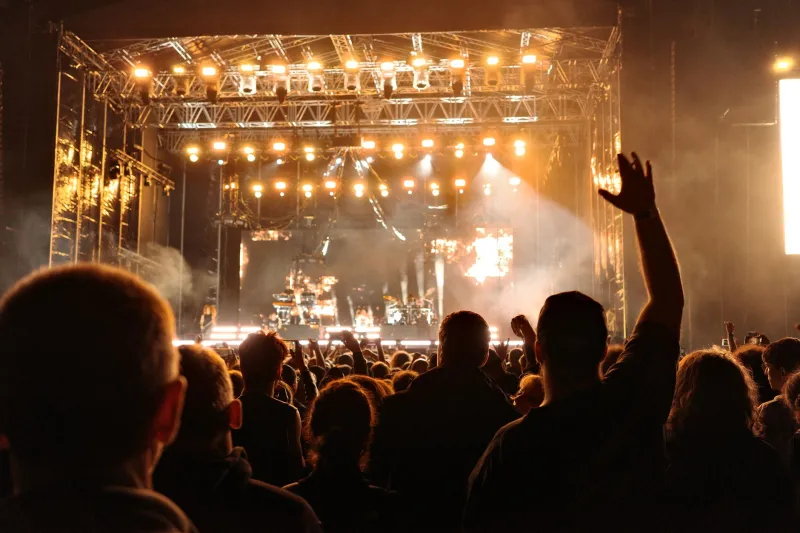
There's a moment — and if you've spent serious time with Grateful Dead recordings, you already know the one — where a jam stops feeling like it's looking for something and starts feeling like it found it. The guitars quit circling. The rhythm locks into something that feels less like a groove and more like a gravitational field. And the crowd, without any announcement, without any signal, goes from politely attentive to absolutely levitating.
Deadheads call it a lot of things. Some say the song "opened up." Others say it "caught fire." A few old-timers from the '70s touring circuit will just tap their chest and say, "You feel it right here."
But what is it, exactly? And how did both the band and the audience develop such an eerily synchronized sense of when it arrived?
The Invisible Clock Nobody Set
If you start timing it across recordings — and yes, people absolutely do this — there's a loose pattern that emerges. Somewhere between three and six minutes into a serious improvisational passage, the energy shifts. Not always. Not on command. But often enough that the Deadhead community developed an informal shorthand around it.
Call it the Five-Minute Rule, though that's a bit of a misnomer. It's less a rule and more a threshold — the point at which a jam has either found its emotional center or revealed that it probably won't tonight.
Long-time concertgoers who followed the band across multiple decades describe it in almost identical terms despite never having coordinated their language. There's the exploratory phase, where Garcia's guitar is essentially asking questions — probing, testing, trying on different melodic shapes. Then there's the moment of commitment, where the band stops offering possibilities and starts inhabiting one. That's the click. That's what separates a transcendent night from a night that was merely very good.
What the Recordings Actually Tell Us
Pull up the May 8, 1977 Cornell show — still one of the most analyzed recordings in the entire archive — and listen to "Scarlet Begonias" into "Fire on the Mountain." The transition doesn't just happen. It arrives. There's a specific moment in the jam where Lesh's bass lines stop being supportive and start being insistent, and Garcia responds not by leading but by following, and suddenly the whole thing locks into a kind of breathless inevitability.
Or go back further. The February 13, 1970 Fillmore East "Dark Star" — one of the genuine holy texts of the archive — has this quality in almost exaggerated form. For the first several minutes, it's beautiful but unresolved, like watching storm clouds build. Then something shifts. The density changes. The spaces between notes start to mean as much as the notes themselves. Listeners who weren't even alive in 1970 report feeling the hair stand up on their arms when that passage hits.
This isn't nostalgia. It's architecture.
Learned, Innate, or Deliberately Cultivated?
Here's where it gets genuinely interesting. Was this timing instinct something the Dead worked to develop? Or did it emerge organically from thousands of hours of playing together?
The answer is probably both, and that's what makes it remarkable.
Garcia was famously influenced by jazz — Miles Davis in particular — and the concept of negative space, of silence as an active musical choice, was baked into his playing philosophy from early on. He understood that a jam's emotional peak wasn't about density or volume. It was about arrival. You can hear him actively managing the energy in longer improvisations, pulling back right when another guitarist might push forward, creating tension that the eventual release made feel earned.
Weir has talked in various interviews about the band developing a kind of collective consciousness on stage — a shared awareness of where the music was and where it wanted to go. That's not mysticism, or at least it's not only mysticism. It's the product of an ensemble that played together more than almost any band in rock history, logging hours that would make most touring musicians faint.
But here's the part that's harder to explain: the audience was in on it.
The Crowd as the Fifth Instrument
Deadheads didn't just witness the jams. They participated in them, and not just in the obvious way of cheering and dancing. The collective energy of an engaged crowd creates a feedback loop with performers that any musician who's played live will recognize. You feel the room. You feel when it's with you.
The Dead were unusually attuned to this. There are bootlegs where you can hear Garcia responding in real time to crowd energy — pulling a jam deeper when the room is locked in, or gracefully steering toward a resolution when the energy starts to drift. It's a conversation happening on multiple levels simultaneously, and the Deadhead audience, through years of dedicated listening, became extraordinarily fluent in the language.
Seasoned followers of the band describe developing their own internal clock over time. The first few shows, everything feels overwhelming. By the twentieth or thirtieth show, you start to recognize shapes. You learn the difference between a jam that's searching productively and one that's gotten genuinely lost. You develop an anticipatory sense, a readiness for the moment when things crystallize.
That's not passive consumption. That's musical education happening in real time, across years, in parking lots and arenas from Portland to New Orleans.
The Dead-End Jam and Why It Matters Too
Not every jam found its soul. That's important to say out loud, because the mythology around the Dead can sometimes flatten the reality. There were nights where the extended improvisations wandered without landing anywhere particularly meaningful. There were second sets that meandered more than they soared.
And here's the thing — those nights matter too, maybe more than people give them credit for.
Because the reason a transcendent jam feels transcendent is precisely that it isn't guaranteed. The risk is real. The possibility of a beautiful, expensive, three-hour evening that just... doesn't quite ignite is what gives the moments of ignition their weight. Deadheads who tried to explain their devotion to skeptical friends often struggled here. How do you articulate that the failure states are part of what makes the success states meaningful?
You don't, really. You just hand them a tape and tell them to start around the forty-minute mark.
What the Five-Minute Rule Is Really About
At its core, what Deadheads are describing when they talk about the moment a jam finds its soul isn't a musical phenomenon. It's a relational one.
It's the moment when five musicians and several thousand people all arrive at the same unspoken understanding simultaneously. It's consensus without a vote, communion without a church, and it happens through the shared language of music that the Dead spent thirty years teaching anyone willing to learn.
The five-minute rule — or four minutes, or six, depending on the night — is really just shorthand for the time it takes to get there. To build enough shared context that the arrival means something. To earn the moment.
Some things can't be rushed. The Dead knew that better than almost anyone.
And the Deadheads, bless them, were always willing to wait.