First Notes, Last Call: How Deadheads Clock a Legendary Night Before the Song Hits Its Second Verse
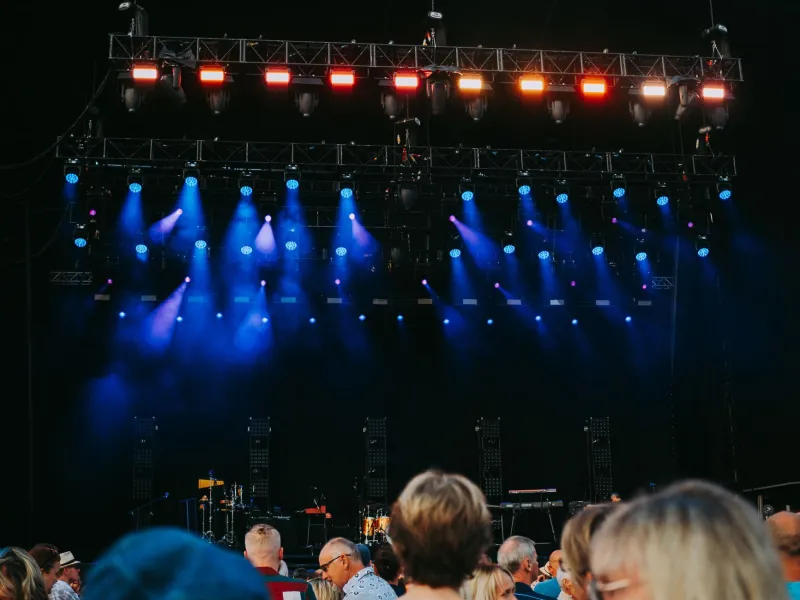
There's a moment — maybe two minutes in, maybe ninety seconds — when a veteran Deadhead will lean over to whoever's standing next to them and say something like, "Oh, this is one." Not a prediction. Not a hope. A statement of fact delivered before most of the crowd has even settled into the groove.
If you've been in those shoes, you know exactly what they mean. If you haven't, it probably sounds like mysticism dressed up as music appreciation. But here's the thing: it isn't mysticism. It's pattern recognition so deeply embedded it operates below conscious thought, the product of hundreds of hours spent inside tapes, at shows, with headphones on at two in the morning arguing about whether the 5/8/77 "Scarlet → Fire" is really better than the 10/18/74 version. (It is. But that's a different argument.)
The question worth asking is: what exactly are they hearing?
The Grammar Beneath the Music
Long-time tapers and setlist analysts talk about the Dead's playing in terms that sound almost linguistic. There's a grammar to how the band operates — a set of musical choices that, when they align in particular ways, signal that something is about to break open.
Bill Kreutzmann and Mickey Hart locking into a specific kind of syncopated conversation, for instance, is different from them simply keeping time. When the rhythmic interplay starts to feel searching rather than grounded, when there's a tension between the two kits that hasn't resolved yet — that's a tell. Garcia's pick attack matters too. There's a difference between Jerry playing at a song and Jerry playing into it, and the distinction lives in the attack on individual notes, the way he'll bend something just slightly past where it needs to go and then pull it back.
Phil Lesh is probably the most readable of all. His bass lines on a hot night don't support the song so much as interrogate it. When Phil starts probing upward into the midrange, when the low end gets deliberately destabilized, experienced listeners know the ground is about to shift.
What the Tapers Knew First
The taper community, which spent decades crouched in designated sections with microphones on stands, developed this instinct out of necessity as much as love. When you're recording a show, you're making real-time decisions about levels, placement, and attention. You learn to hear the early signals because missing them means missing the moment when everything opens up.
Talk to anyone who taped consistently through the eighties and early nineties and they'll describe a physical sensation — something that kicks in before the analytical brain catches up. The air in the room changes. The band's communication becomes visible in ways it wasn't thirty seconds earlier. Eyes start tracking across the stage differently. Jerry and Bobby might not even be making eye contact, but something is being negotiated.
"You stop listening to the song," one longtime taper explained in a community forum thread that circulated widely a few years back, "and you start listening to the band listening to itself. That's when you know."
The Five-Minute Threshold Is Real — But It's Not a Clock
Calling it a "five-minute rule" is convenient shorthand, but it undersells the complexity. The window isn't measured in minutes. It's measured in musical events — how many call-and-response moments have happened between instruments, how many times the key center has been implied rather than stated, whether the tempo has been subtly negotiated upward or whether it's stayed locked in place like the band is waiting for permission to move.
Some songs telegraph their destiny faster than others. "Dark Star" is almost immediate — within the first few exchanges, you can feel whether the band is in the mood to go somewhere genuinely strange or whether they're going to play a polite version and move on. "Playing in the Band" takes longer to read because its architecture is more forgiving; it can sustain a mediocre night without fully revealing itself as mediocre until the twenty-minute mark.
"Terrapin Station" is the hardest. It has such a strong internal structure that even a middling performance sounds pretty good, which means distinguishing the transcendent versions from the merely excellent ones requires a different kind of attention — focused less on the early signals and more on how the band handles the transitions between movements.
Why Casual Listeners Miss It
This isn't a gatekeeping argument. Nobody is born knowing this stuff, and plenty of people who've been around the community for decades still experience it more emotionally than analytically. Both are completely valid ways in.
But the reason casual listeners — or people encountering the Dead through streaming playlists and algorithm recommendations — don't catch these signals is straightforward: they don't have the reference library. The signals only mean something if you know what they're signaling toward. You need to have heard enough versions of a song to understand what the band is departing from when they depart from it.
This is, ultimately, why the archive matters so much. The vault isn't just a historical record. It's the curriculum. Every show you listen to adds another data point to the internal model you're building — another example of what the early minutes of a "Estimated Prophet" sound like when it's going to go somewhere versus when it's going to stay home.
The Living Archive
What makes this particularly alive right now, fifty-plus years into the Dead's story, is that new listeners are building these libraries in compressed time. Streaming has made the archive more accessible than it's ever been, which means someone who discovered the Dead in 2021 might have three hundred shows under their belt by 2024. They're developing the pattern recognition faster than someone who had to wait for tapes to arrive in the mail.
That's not a small thing. It means the community of people who can read a show in real time — or in the first five minutes of a recording — is growing rather than shrinking. The knowledge isn't dying with the generation that was there. It's being transmitted, show by show, note by note, through the archive itself.
Which is maybe the most Grateful Dead outcome imaginable. The music teaching people how to listen to the music, indefinitely, without end.